How Much Firewood Do I Need? kW Sizing Guide for Melbourne Heaters
Most people try to size their firewood order around their room. Wrong number to start with. The number that actually matters is on your heater itself, usually on a small plate on the front panel or in the manual: the kW output rating.
Why kW, not room size
Room size tells you how much heat you need to fill a space. It doesn't tell you what the heater's firebox is built to burn. Two heaters warming the same size room can take very different piece sizes depending on their output and firebox dimensions, which is why the kW rating, not the square metres of the room, is the number to work from.
Why the wood itself matters as much as the size
Getting the split size right is only half the equation, the wood itself has to be doing its job too. Firewood is broadly split into hardwood and softwood, and the terms describe the wood's density rather than literally how hard it is. Dense hardwoods, which is what most Australian firewood is, burn slower and steadier, holding heat in the coals long after the flame has died down. That's exactly what a heater is designed to run on, and it's why hardwood is the standard fuel for wood heaters rather than an upsell.
Moisture content matters just as much as species. Freshly cut wood holds a lot of water, and green or unseasoned wood is genuinely hard to get going, it smoulders more than it burns and gives off noticeably less heat for the same amount of wood. Properly seasoned firewood, dried out over months rather than weeks, lights easier, burns hotter and leaves less residue in the flue. Every load from us is seasoned and dry before it goes in the bin, so that part's already taken care of.
Matching split size to kW rating
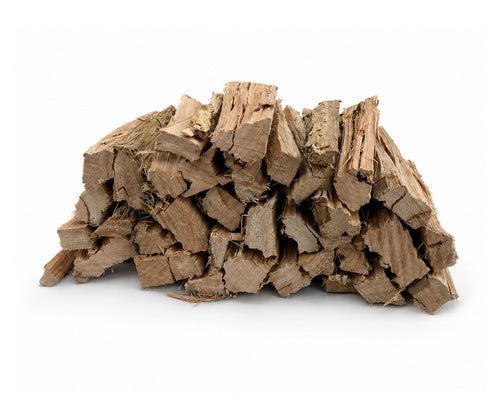
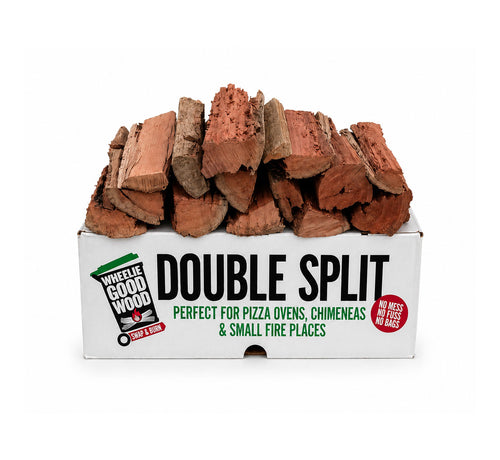
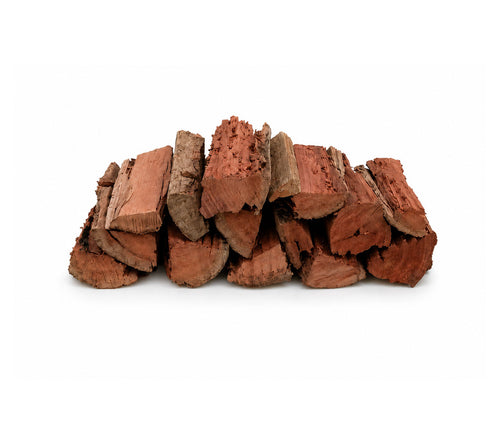
Heaters under 8kW, small freestanding units, slow combustion heaters and most pizza ovens, work better with a Double Split. It's a smaller piece, roughly the width of a wrist or a wine bottle at 30cm long, so it catches faster and suits a smaller firebox.
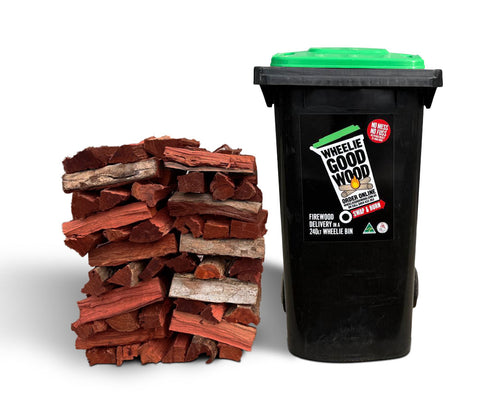
Heaters above 8kW, and most open fireplaces, take a Regular Split comfortably. That's closer to the size of a loaf of bread, also 30cm long. It's a bigger piece built for a bigger firebox and a longer, steadier burn.
Finding your heater's rating
It's almost always printed on the compliance plate on the heater's front panel, or in the original manual. If neither is on hand, the manufacturer's model number will usually bring it up with a quick search. Worth doing once and remembering, since it's the same number every time you reorder.
Ordering once you know your size
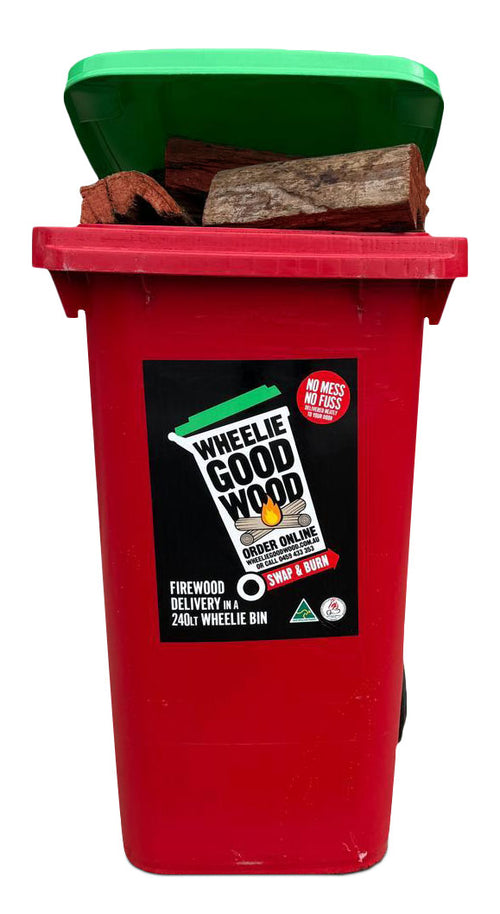
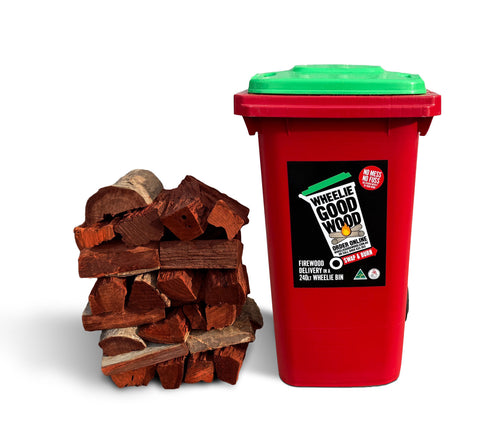
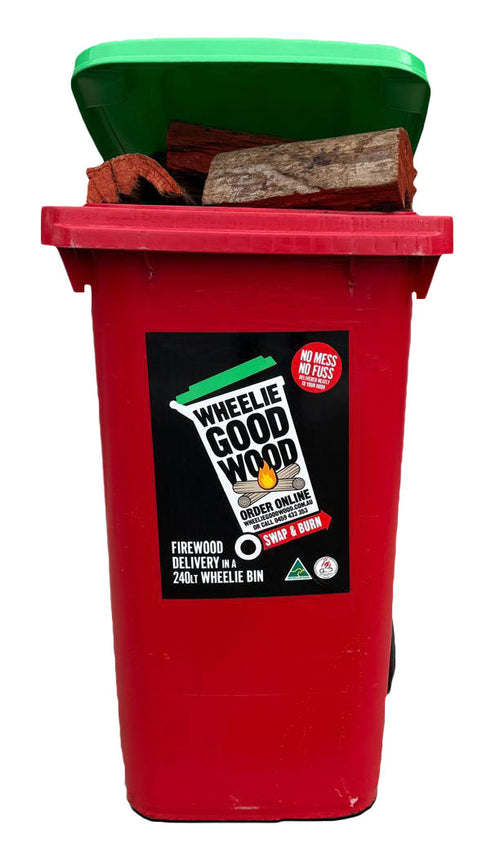
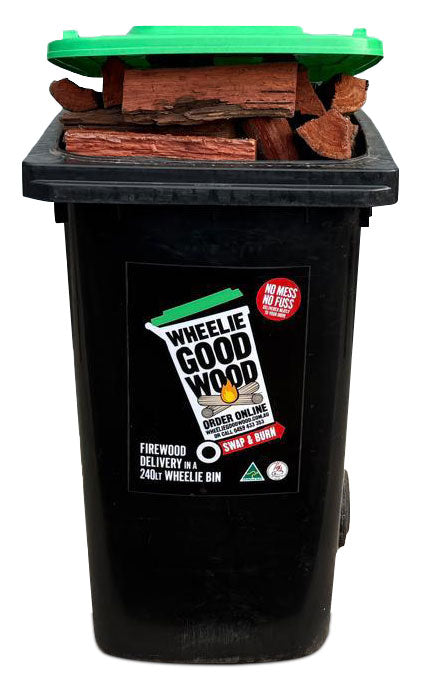
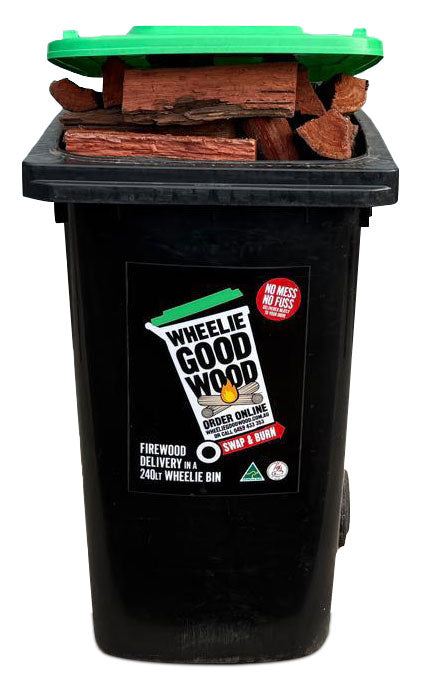
A single wheelie bin holds a full load, roughly equivalent to 7 standard bags of firewood, delivered dry and ready to burn with nothing to stack. Order a one-off bin when you need it, or set up a subscription so you're never caught out; both work the same way at checkout and neither locks you in. Already have another supplier's bin sitting in the yard? We'll swap it for one of ours without charging the new bin fee.
Quick FAQ
Can I mix Standard and Double Split in one order?
Yes, order each as a separate product and both will arrive in their own bin.
What if my heater sits right around 8kW?
Either split will burn fine; Double Split lights a little faster, Regular Split holds a little longer between reloads.
Does a bigger kW rating mean I need more wood, not just bigger pieces?
Generally yes, higher-output heaters get run more, so it's worth checking your usual burn frequency as well as the rating.
If you'd rather not do the maths yourself, the Firewood Finder tool on our residential page asks three quick questions, heater size, how often you burn, and what matters most to you, and points you straight to the right product.
Use our easy to use quiz to help you order your winter wood.
Visit here